
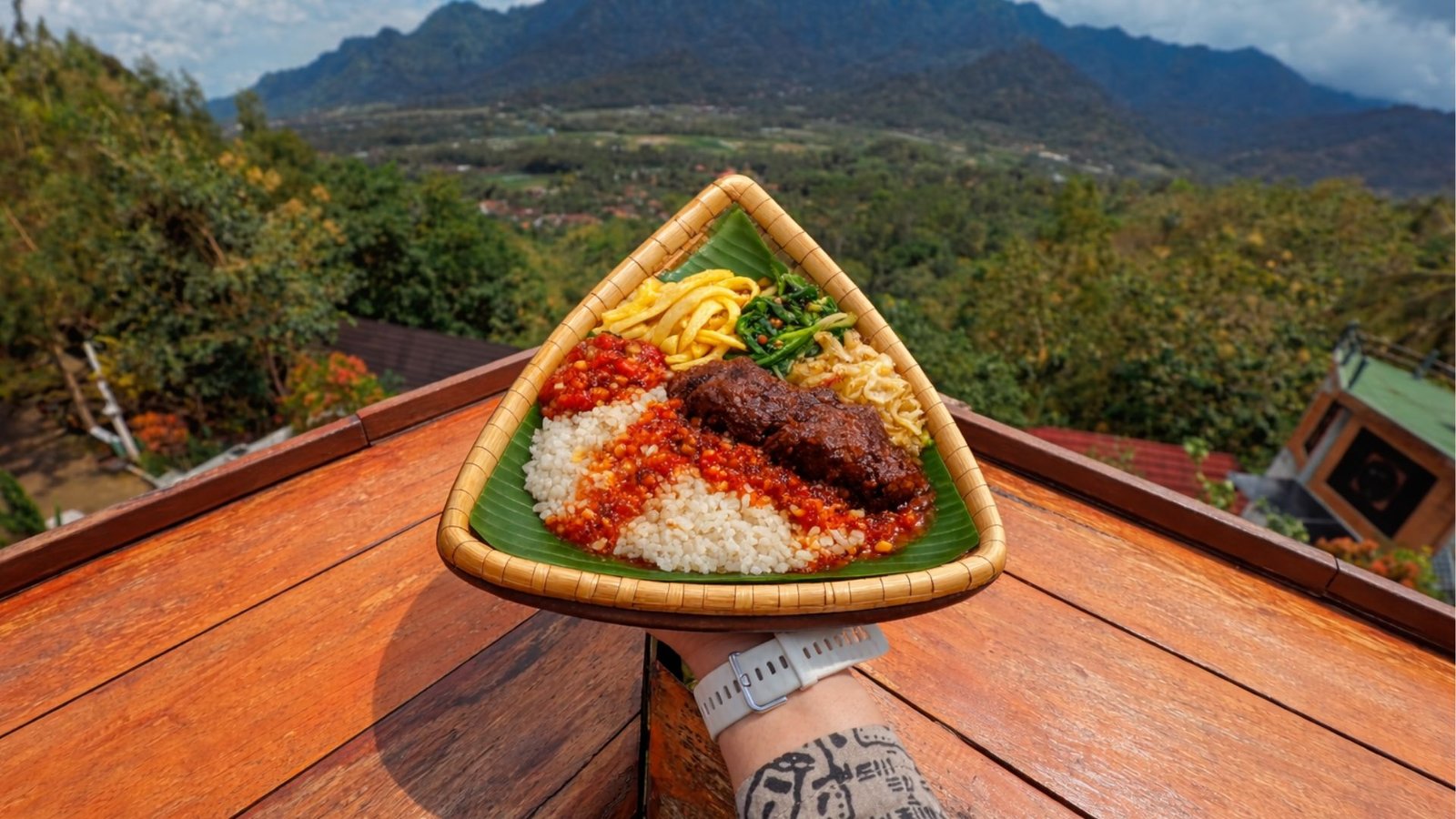
Mornings on Magelang have their own way of opening up the appetite. The air was still cold, the fog had not really risen, and from the corner of the market to the home stalls, the aroma of warm food always seemed to come before the crowds. In a city like this, food is not just about being full. It is memory, the rhythm of life, the way people welcome guests, and the way a region maintains its identity. Therefore, when people talk about famous culinary Magelang and local wisdom Magelang, what is actually being discussed is not just the delicious taste, but also the cultural traces that still survive on today’s plates.
I always felt that Magelang had a warm, humble, and unpretentious character. It’s not much of a gimmick, but once it’s in your mouth, there’s something that feels familiar. Maybe because there are many typical food Magelang born from simple ingredients, from the home kitchen, from the garden, from the market, and from traditions passed down without much ceremony. That’s precisely where the value is. It is close to everyday life, and because it is close it is easy to think of as ordinary – even though if it is not maintained, the ordinary can disappear very quickly.
Culinary Magelang is famous not only for its taste but also local wisdom Magelang
When viewed from the perspective of culinary anthropology, regional food always carries more than just the composition of ingredients. It carries the landscape, way of life and social relations of its people. Magelang has a strong combination for that: an agricultural area, Borobudur tourist routes, a living market tradition, and eating habits that remain close to the taste of home. It is not surprising that the official Central Java culinary page for Magelang Regency displays dishes such as Mangut Beong, Muntilan Sticky Tape, Kupat Tahu, Wajik, and even Magelangan fried rice as part of the regional taste identity.
What makes it interesting is that many of these foods are not born from the logic of “luxury”, but rather from the logic of “enough, useful and shared”. That’s where it is Javanese culinary heritage feels so strong. Food becomes a bridge between daily needs and life values: simplicity, mutual cooperation, patience, gratitude, and the courage to adapt. So, if you are compiling a list Magelang local culinary recommendations, it’s good to look at it not only from where it went viral, but also from what stories and local wisdom Magelang still live behind each dish.
Gethuk Magelang feels simple but meaningful – Local wisdom Magelang
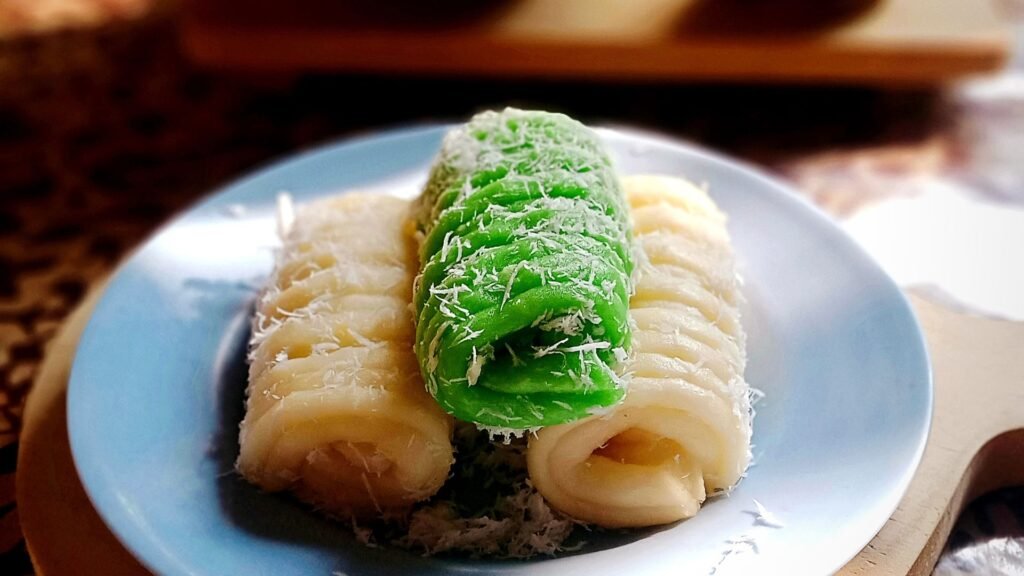
If there is one flavor that I think best represents the earthy face of Magelang, the answer is this gethuk Magelang. The basic ingredient is only cassava, but the end result can be so iconic. In Magelang City, getuk even has a strong symbolic position. Grebeg Gethuk celebrations are routinely held as part of the city’s anniversary celebrations, with mountains of gethuk and secondary crops as symbols of gratitude. The City Government of Magelang also emphasized that this tradition helps strengthen the branding of Magelang as “Getuk City.”
What’s even more interesting, one of the official sub-district pages at Magelang explains that getuk has a philosophical meaning about simplicity, usefulness and the ability to innovate from simple materials. For me, this is very beautiful. Cassava is not a glamorous ingredient, but in the hands of the people, it turns into something to look for, take home and be proud of. Gethuk teaches that culinary identity is not always born from expensive ingredients; Sometimes it actually grows from people’s ingenuity in reading what is available around them.
In its sweet taste and soft texture, getuk seems to hold an important lesson: what is simple does not necessarily have small value. It is precisely from food like this that we learn that culture survives because it continues to be used, continues to be interpreted, and continues to be adapted without losing its essence.
Kupat tofu Magelang always feels familiar at many tables
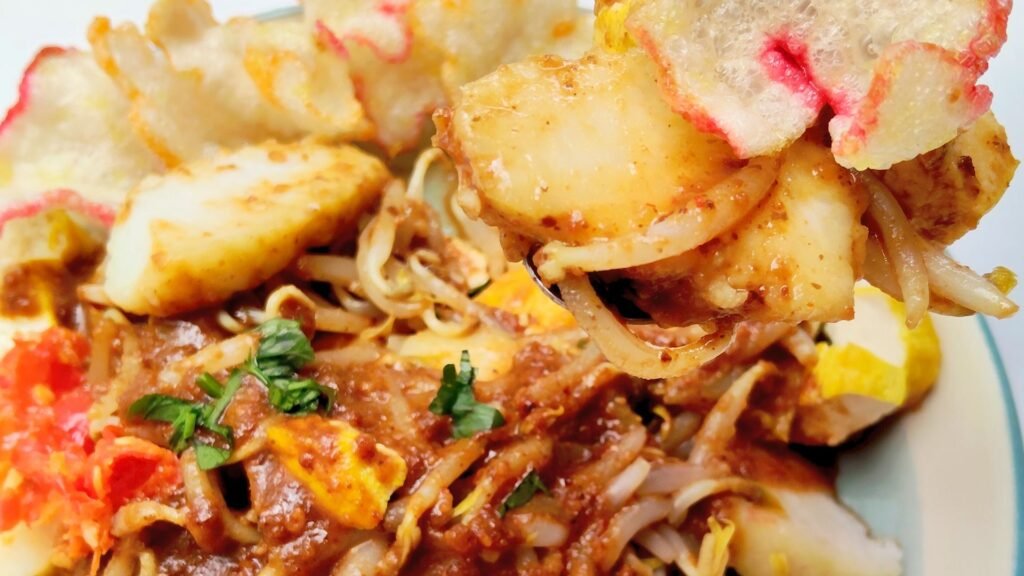
There are foods that taste good, and then there are foods that taste like coming home. For many people, kupat tofu Magelang fall into the second category. The official Cacaban Village website calls kupat tofu as one of Magelang City’s specialty foods and has become a city icon, so it is easy to find from the city center to the outskirts. On the official Visit Jateng website, kupat tofu Magelang is also described as having a sauce that tends to be darker, thicker, with a distinctive combination of sweet and spicy flavors.
Culturally, kupat or ketupat is often read as a symbol of open-heartedness and mutual forgiveness, especially in Javanese traditions and during Eid. Therefore, it’s not surprising that kupat tofu feels very social: it’s not a social distancing food. The components are simple, the presentation is familiar, and the taste doesn’t try to be intimidating. Tofu, kupat, bean sprouts, cabbage, chili sauce, and peanut sauce or special seasonings work like a fluid conversation—not noisy, but immediately connected.
At the dinner table, kupat tofu also demonstrates an important point: strong traditional food doesn’t have to be complicated. Sometimes what makes it immortal is precisely because it is easily accepted by many generations. Small children can still enjoy it, parents still seek it out, and newcomers easily fall in love with the taste that feels honest.
Senerek soup records household characteristics – Local wisdom Magelang
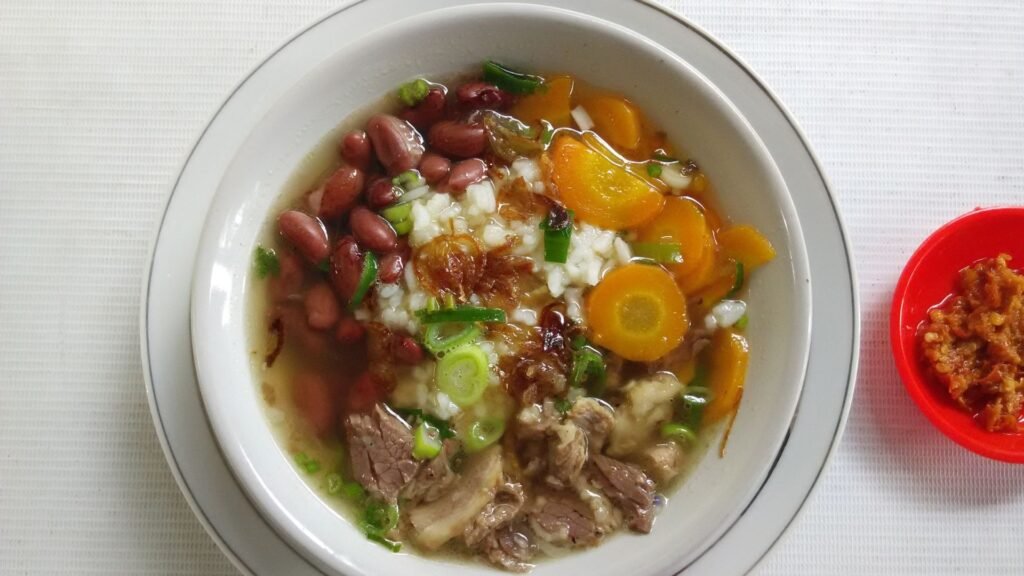
If getuk talks about simplicity, then sop senerek talks about the warmth of home. Visit Central Java describes Sop Senerek as one of Magelang’s mandatory culinary specialties, containing meat, red beans, carrots, potatoes and spinach. From its composition alone, it can be seen that this food was not born from the desire to appear luxurious, but from the need to provide warmth and nutrition in a down-to-earth way.
What I like about sop senerek is its egalitarian nature. It doesn’t feel exclusive. A bowl of this soup can go a long way on a cold morning, a busy afternoon, or an afternoon that’s starting to rain. There is a calm savory taste, there are vegetables that make it taste clean, and there are red beans that give it distinctive character. In anthropological terms, this is not just comfort food; it is the food that keeps the family in rhythm.
Senerek soup also shows that Magelang’s culinary identity is built by food that is both functional and emotional. It’s filling, yes. But more than that, it is calming. And isn’t it true that many culinary legacies survive precisely because of their ability to soothe everyday life?
Mangut Beong – Local wisdom Magelang
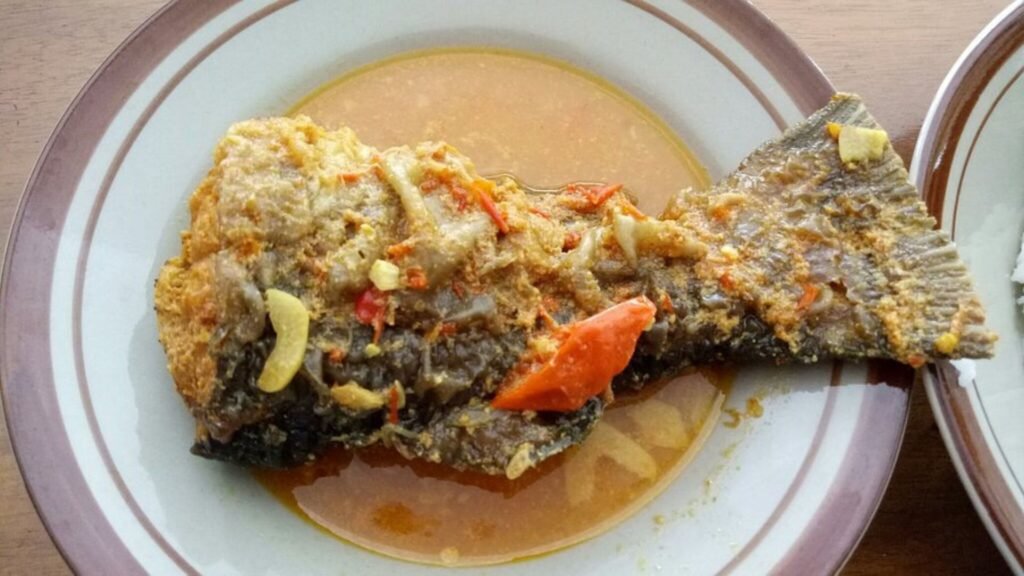
Among many familiar flavors, Mangut Beong appears as a more assertive character. The official Visit Jateng website places Mangut Beong as one of the culinary specialties of Magelang Regency and strongly links it to the Borobudur area. This dish is known for using beong fish, a freshwater fish that is very synonymous with the region, then cooked in mangut sauce which is rich in spices and tends to be bold.
If getuk feels soft and kupat tofu feels familiar, mangut beong feels like it has attitude. There’s spicy, there’s smoke, there’s depth of coconut milk and spices. For me, this food is like a portrait of Magelang from the other side: not only cool and sweet, but also strong, firm, and very connected to local nature. This dish reminds us that regional culinary delights are always born from humans’ relationship with their environment. Rivers, local fish, cooking techniques and people’s taste buds meet in one bowl of flavor.
That’s why losing a traditional dish isn’t just a loss on the menu. Sometimes what is lost is knowledge about the environment, seasons, local ingredients, and cooking methods that have developed from the community’s long experience.
Muntilan sticky rice tape about patience and transformation – Local wisdom Magelang
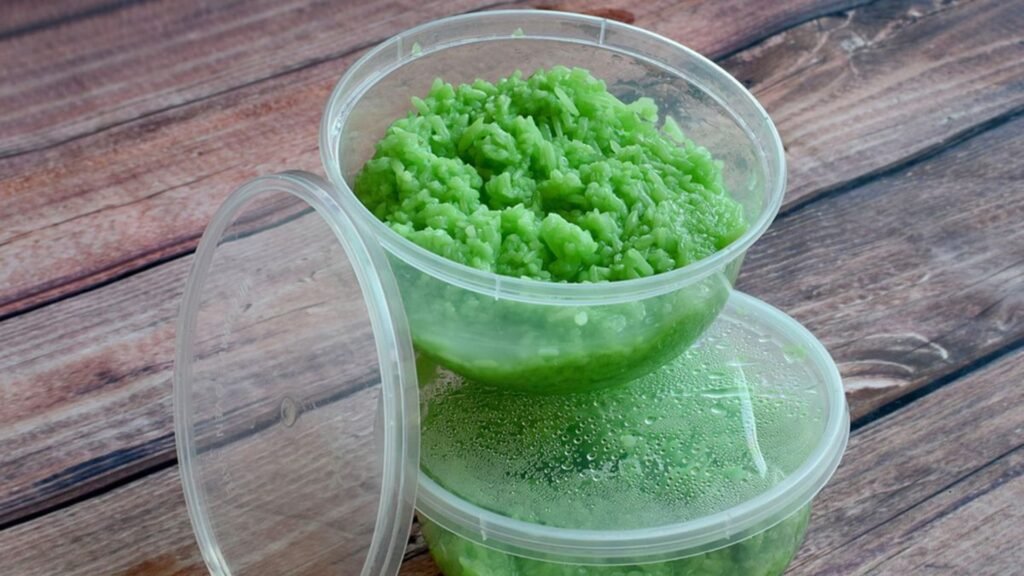
Another flavor that I think is important to read as a symbol is Muntilan Sticky Tape. On the official Visit Jateng website, this tape is described as processed white sticky rice which is steamed, fermented, added with sugar, then left to rest for several days. This process is simple, but the results are not instant. There is time to wait. There are changes that cannot be forced.
From here, sticky rice tape feels like a very Javanese metaphor: something good requires a process. Fermentation changes the taste, aroma, and texture. What was originally just ordinary sticky rice turned into a food with a deeper character. In a cultural reading, we can see this as a symbol of patience, perseverance, and trust in the process—values that are increasingly less appreciated in the fast-paced age.
Foods like sticky rice tape also prove that tradition is not the opposite of creativity. In fact, traditions are born from long experiments which are finally accepted as common habits.
Why is Java’s culinary heritage under threat in the modern era?
The biggest challenge for today’s culinary heritage is not just competition with modern food, but changes in the way of life. People want fast, practical, uniform, and easy to visualize. Meanwhile, many traditional foods are actually born from slow processes, flavors that are not always “hot”, and techniques that rely heavily on hand experience. When the younger generation only knows the final result without understanding the process, then what is inherited is only the name, not knowledge.
This is where more serious preservation is important. The Ministry of Culture, through its official channels, has repeatedly emphasized that the preservation of intangible cultural heritage does not stop at designation, but must continue with protection, development and utilization. They also emphasized the importance of recording or inventorying so that cultural origins, values and knowledge are not obscured. In this context, opening the archive Ministry of Education and Culture’s Indonesian culinary heritage is not just a matter of documentation, but a way to remember that traditional food is part of the nation’s identity that needs to be cared for together.
If you don’t look after it, it’s not just the recipe that will be lost. What is missing is context: why the food was made, when it was usually served, what local ingredients were used, and what values once accompanied it.
Kedai Bukit Rhema helps maintain local flavor – Local wisdom Magelang
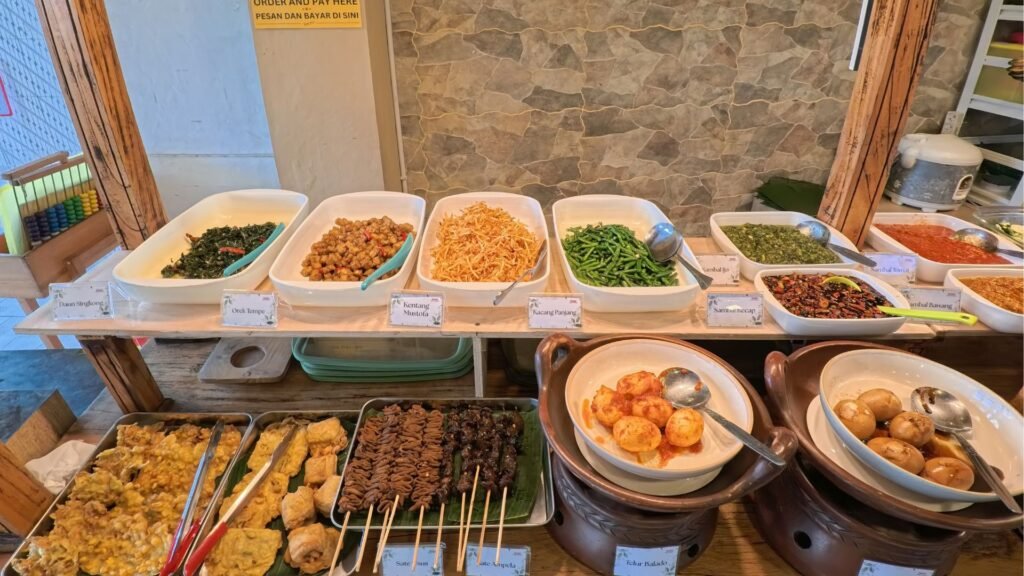
In my opinion, culinary preservation does not always have to come in a rigid or museum-like form. Sometimes it is actually more effective when it is present in a lively space, visited by families, tourists and the younger generation. Therefore, ideas Kedai Bukit Rhema local culinary guardian feels relevant. Places like this can be a bridge: local flavors are maintained, but the presentation is made more modern, more comfortable, and more accessible to people who may be getting to know traditional culinary Magelang for the first time.
The statement that a place like Kedai Bukit Rhema tries to maintain local flavors in a more modern and accessible concept, in my opinion, is not just positioning. That could be a realistic conservation strategy. Because, the culture that survives is not only the “original” culture, but the culture that still has room for use in today’s life.
If traditional stalls keep their roots, then more adaptive spaces can help expand their reach. The two do not need to be confused. In fact, if we strengthen each other, local culinary delights will have a longer future.
FAQ – Frequently asked questions
Apa saja kuliner Magelang terkenal yang wajib dikenali?
Beberapa kuliner Magelang terkenal yang paling sering dibicarakan adalah gethuk, kupat tahu Magelang, sop senerek, mangut beong, dan tape ketan Muntilan. Masing-masing punya rasa khas dan cerita budaya yang kuat.
Mengapa makanan khas Magelang dianggap sebagai warisan budaya?
Karena makanan khas Magelang tidak hanya diwariskan lewat resep, tetapi juga lewat kebiasaan keluarga, tradisi pasar, bahan lokal, dan nilai hidup masyarakat setempat yang terus dijaga dari generasi ke generasi.
Apa filosofi gethuk dan kupat tahu Magelang?
Gethuk sering dimaknai sebagai simbol kesederhanaan dan kreativitas dari bahan yang sederhana. Sementara kupat tahu Magelang lekat dengan makna kebersamaan, keakraban, dan semangat saling memaafkan.
Apa tantangan menjaga warisan kuliner Jawa di era modern?
Tantangannya ada pada perubahan gaya hidup yang serba cepat, berkurangnya minat generasi muda mempelajari resep tradisional, serta banyaknya makanan modern yang lebih praktis dan lebih mudah dipromosikan.
Bagaimana cara ikut melestarikan kuliner lokal Magelang?
Cara paling sederhana adalah dengan mencicipi makanan tradisional, membeli dari pelaku lokal, menceritakan pengalamannya, dan mengenalkan kuliner khas Magelang kepada generasi muda agar tetap relevan dan dicintai.
What can the younger generation do to keep the famous Magelang culinary delights alive?
The answer may be simpler than we think: recognize, taste, tell, and support. Get to know not only the name of the food, but the story behind it. Taste not only what is viral, but also what is passed down. Tell the story not in patronizing language, but with reasonable pride. And support it not only through praise on social media, but by actually coming, buying, inviting friends, and considering traditional food as part of a lifestyle worth being proud of.
In the end, famous culinary Magelang and local wisdom Magelang will not remain alive just because of an algorithm or a momentary trend. It lives if there are still people who feel that this food represents home, represents the city, and represents themselves. From the simple getuk, the familiar kupat tofu, the comforting sop senerek, the bold mangut beong, to the patient sticky rice tape—all teach that local flavors are how a community tells about itself.
And maybe that’s the most important reason why we have to keep it together.
Tell us your favorite local culinary delights!