
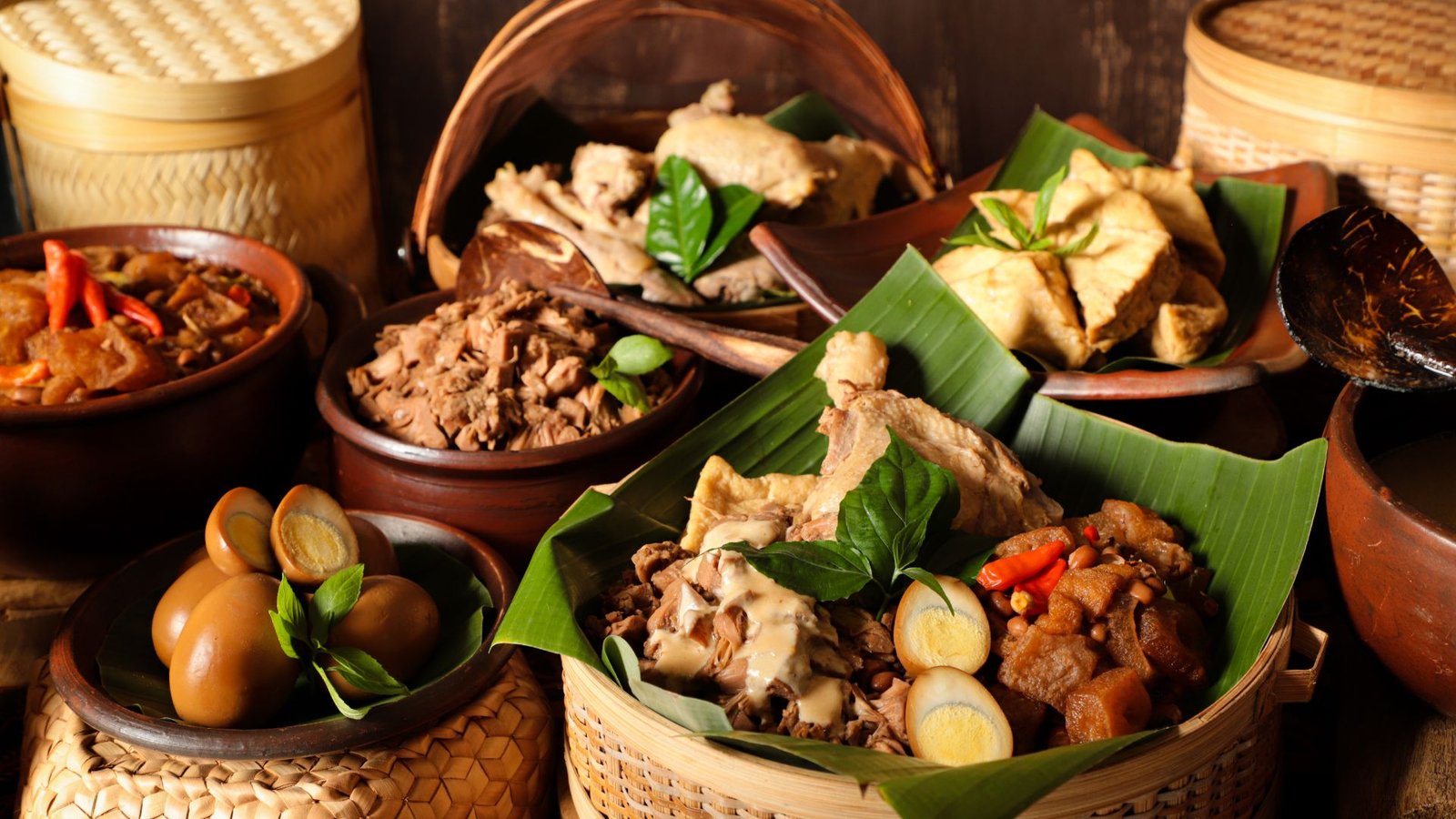
Day 6 – late night from the Sheraton Mustika, I actually did dinner quite decent. Your stomach isn’t really hungry, but your head is still thinking about one thing: “Have you come home from Jogja and stopped by the legendary nightly gudeg cooked in Pawon?” Finally, my family and I decided to go out again, along the empty streets towards Gudeg Pawon on Jl. Janturan. As soon as I arrived at the narrow alley full of motorbikes and people queuing, I immediately understood why this place was always on my “must try” list for nightly culinary delights in Yogyakarta.
The atmosphere is far from luxurious, but warm and lively. Dim yellow lights, snaking queues, and the sweet and savory aroma of an old school kitchen that blends with the house. That night, I didn’t come because I was hungry, but because I was curious about the long story of Gudeg Pawon Janturan, which has been around since 1958.
Kenapa Saya ke Gudeg Pawon Janturan
As someone who likes culinary delights, I have a weakness: it’s hard to resist a place that has “legendary” status and has a unique way of serving food. Gudeg Pawon is not just delicious gudeg; The main attraction is the way to take food directly from the pawon (traditional kitchen) and the old school feel that is still maintained.
Jogja itself is synonymous with gudeg, but usually we imagine breakfast or lunch with sweet and complete gudeg. Well, Gudeg Pawon offers a different experience: gudeg which is popularly enjoyed late at night. Most visitors come around 23.00 to 00.30 when the city atmosphere starts to calm down and the streets are less busy. At that hour, this place was actually alive.
My expectations were quite simple: to get a portion of warm, sweet and savory evening gudeg, with fresh side dishes, plus the experience of queuing in the narrow alley that people often talk about. But beyond that, I also want to feel the atmosphere of the “old Jogja house” which is not much left.
Also Read: Recommendation Cafe Borobudur
Eating Experience at Gudeg Pawon Janturan
As soon as you get out of the vehicle, the first challenge is immediately felt: parking. For motorbikes and cars, the parking area is limited because the alley is narrow. Motorbikes can be tucked in several corners, but cars require extra patience and usually have to be parked a little further away and then walk. This is important for you to take into account if you come with your family.
The queue that night was snaking in front of the house. The average person can wait around 30–60 minutes before it is their turn. Interestingly, even though it’s long, the queue feels like it “goes on” and has its own exciting sensation. You stand between local people and tourists, occasionally smelling the aroma of gudeg and kitchen smoke coming out of the pawon. For me, waiting here is part of the experience, not just an obstacle.
When the door to the house is opened and the queue starts to head towards Pawon, you will see a sight that is rarely found in modern eating places: a large pot filled with gudeg, side dishes arranged on the table near the stove, and several people swiftly scooping up rice, gudeg, krecek and other side dishes of choice. Everything is done in the kitchen area that is actually used, not a decorative kitchen.
For Location: Google Maps
Take it Yourself from Pawon Gudeg Pawon Janturan
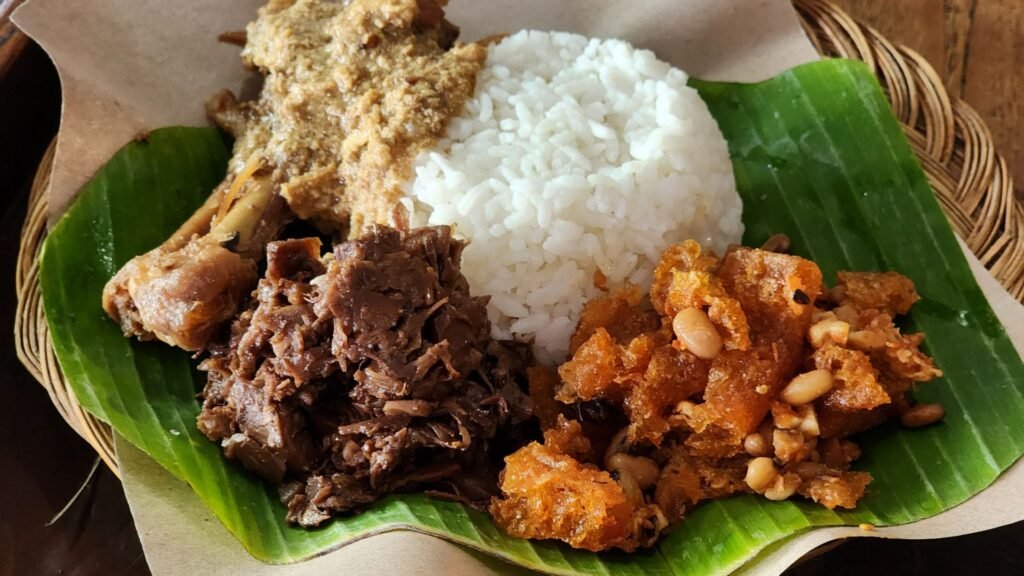
One of the advantages of Gudeg Pawon is the concept of taking it directly from Pawon. It feels like visiting a Jogja person’s house and then eating in their kitchen. You will advance according to your turn, state your order, and see firsthand how the rice and gudeg are arranged on the plate or wrapper.
The old-school feel is strong: simple walls, a traditional stove, and appliances that aren’t made for Instagram. Here, the kitchen is not just a photo backdrop, but the center of all activities. For me, details like this are what make the evening culinary at Gudeg Pawon different from other gudeg in Jogja.
Taste Gudeg Pawon Janturan
Regarding taste, gudeg here plays in a fairly balanced sweet-savory area. The jackfruit is cooked for a long time so that the texture is soft, without tough fibers, and the flavors are absorbed. The areh feels thick enough to give a light creamy effect without being unpleasant. Krecek provides a spicy-savory contrast, and side dishes such as chicken or eggs make one portion feel complete.
Eating gudeg late at night has its own sensation. The air is cooler, the body is a little tired after a day’s activities, and a portion of warm food like this feels comforting. Not the type of food that “surprises”, but more of a homely taste that slowly makes you comfortable. The aftertaste is sweet-savory and quite impressive, especially if eaten on a stomach that is not too full.
I spent around 40–60 minutes at the location, including time to wait, choose a simple seat, and enjoy a portion of gudeg to the end. If you come not too hungry, a portion can be shared between the two of you, especially if you have already had dinner beforehand like me.
Information for Gudeg Pawon Janturan
This section is important if you are the type who likes to plan your visits neatly:
- The best time comes: Gudeg Pawon is delicious to enjoy late at night, and peak hours are usually around 23.00–00.30. If you come too late, the risk of running out of side dishes is greater. If you arrive too early, the line won’t be fully open.
- Motorbike/car parking: Parking around Jl. This provision is limited in nature because the alley is quite narrow. Motorbikes are relatively more flexible, while cars require a little effort to find a safe position. It’s best to come by motorbike, online taxi, or be prepared to walk a little.
- Brief history: Gudeg Pawon has been around since approx 1958, so you don’t just eat a plate of gudeg, but also taste a small part of Jogja’s culinary history.
- Total duration of visit: Average, prepare 40–60 minutes at the location, including queuing, picking up orders at Pawon, and eating on the spot.
For those who come with children, the late night atmosphere and narrow alleys need to be considered. Hold your child’s hand, ask him to sit in a place that is somewhat safe from people passing by, and don’t forget to prepare a jacket if your child gets cold easily.
Short Chat with Employees Gudeg Pawon Janturan
I chatted briefly with one of the employees when the queue was a bit loose. From that brief chat, several things I noted:
- Open until what time?
They explained that the closing hours are flexible, following when the rice and side dishes run out. So, in practice, they stop serving when the merchandise is empty, not when the clock shows a certain number. - What’s on the menu the fastest?
Favorite parts such as chicken side dishes and several choices of krecek usually run out earlier than other components. If you have a desired side dish, it’s best to come not too late. - Tips for queuing to stay comfortable?
According to them, it is permissible to come in groups, but only one person standing in the queue should be represented so that the aisles don’t become more crowded. Bringing your own drinking water also helps, especially if you are one of those who wait the full 60 minutes. - Payment is cash only or non-cash?
When I arrived that evening, payment was still dominated cash. It’s safer if you prepare enough cash and don’t limit the amount too much. Payment methods may change over time, so consider this a record of experience, not a permanent rule.
Short chats like this help me understand their work rhythm. Behind the long lines, there is a small team that moves quickly in the cramped kitchen, keeping the taste and flow of dishes consistent.
As a culinary delight in Jogja, it’s difficult to try just one gudeg. So, it’s natural for you to ask: “What’s the difference between Gudeg Pawon and Gudeg Permata or Gudeg Yu Djum?”
- Gudeg Pawon (Jl. Janturan)
Strong in night experience and a unique way of serving because it comes directly from Pawon. Narrow aisles, long queues, and active kitchens are the main part of the story. Suitable for those of you who are looking for a nightly culinary sensation with an old school home feel. - Gudeg Permata
Identical to nighttime culinary too, but the atmosphere is more like the atmosphere around an old cinema and an area that is a little more open. Suitable for those of you who like the atmosphere of city streets at night. - Gudeg Yu Djum
More often associated with gudeg which can be enjoyed from the morning, suitable for breakfast or souvenirs. There are many branches and relatively easy to access, making it convenient for tourists who want practical and structured choices.
Without having to drop anything else, for me gudeg pawon janturan stands out on the “whole experience” side: from the way you arrive, queuing, the small steps you take into the house, to the moment you pick up your food directly in the kitchen. If you like culinary delights that are not just about the taste, but also the atmosphere and story behind it, Gudeg Pawon deserves to be on the first list.
Tips to keep the queue for Gudeg Pawon Janturan fun
So that your visit to Gudeg Pawon still feels enjoyable even if you have to wait a long time, you can consider these tips:
- Choose the right time
Arrive too early, the line may not be open yet; Arrive too late, risk running out of favorite menu. Range 23.00–00.30 usually the peak of the crowd, but also when the atmosphere is most “lively”. - Come with a unified team
If you come in a group, just one person stands in the main queue. Other members can wait at a point that does not block the road. This reduces crowding in narrow aisles and makes the queue feel more orderly. - Have cash and order in mind
So that your turn doesn’t take long in front of the pawon, think first about what you want to order: for example, gudeg rice with chicken + egg + krecek. When advancing, state the order clearly. Having cash already prepared also speeds up the process. - Use comfortable footwear
You will stand for a long time in an alley where the surface is not always flat. Sandals or comfortable shoes will make the 30-60 minutes of queuing feel lighter. - Pay attention if you bring children or elderly people
Look for a waiting spot that is somewhat spacious, far from passing motorbikes. If necessary, let children or parents wait in the vehicle until the queue starts to move towards Pawon. - Don’t come too hungry
This is important. Because the wait can be quite long, it’s better if you come “reasonably hungry”, not seriously hungry. That way, you can enjoy the process without emotional ups and downs.
Also Read: Mangut Lele Spicy-Savory at Mangut Lele Mbah Marto, Bantul
FAQ – Frequently asked questions
Gudeg Pawon Janturan bukanya jam berapa?
Gudeg Pawon dikenal sebagai kuliner larut malam, biasanya mulai buka sekitar malam hari dan akan tutup ketika nasi dan lauk habis. Jam ramai pengunjung umumnya sekitar 23.00–00.30. Karena jam operasional bisa berubah, sebaiknya Kamu cek info terbaru atau datang sedikit lebih awal dari jam ramai.
Apa yang bikin Gudeg Pawon janturan berbeda dari gudeg lain di Jogja?
Yang membuat Gudeg Pawon terasa beda adalah konsep ambil sendiri dari pawon (dapur) dan suasana rumah jadul yang masih dipertahankan. Kamu benar-benar akan masuk ke area dapur, melihat panci besar berisi gudeg, dan pesan langsung di sana. Ditambah lagi, tempat ini sudah ada sejak sekitar 1958, jadi pengalaman makannya terasa lebih bersejarah.
Parkir di Gudeg Pawon janturan susah nggak?
Parkir di sekitar Gudeg Pawon memang terbatas karena berada di gang yang cukup sempit. Motor masih relatif lebih mudah diatur, tapi untuk mobil biasanya perlu sedikit usaha menemukan posisi yang aman, kadang harus parkir agak menjauh lalu jalan kaki. Kalau memungkinkan, datang dengan motor atau menggunakan taksi/ojek online bisa jadi pilihan lebih praktis.
Berapa lama biasanya harus antre?
Rata-rata pengunjung bisa menunggu sekitar 30–60 menit saat jam ramai. Antreannya mengular di gang kecil, tapi perlahan bergerak. Buat mengurangi rasa bosan, Kamu bisa datang dalam kondisi tidak terlalu lapar, bawa air minum sendiri, dan siapkan pesanan di kepala supaya proses di depan pawon berjalan cepat.
Apakah bisa bayar non-tunai di Gudeg Pawon janturan?
Saat pengalaman saya berkunjung, pembayaran masih mengandalkan tunai. Karena itu, sebaiknya Kamu tetap menyiapkan uang cash yang cukup. Metode pembayaran bisa saja berkembang seiring waktu, tapi membawa uang tunai tetap pilihan paling aman untuk saat ini.
Cocok nggak kalau bawa anak kecil ke Gudeg Pawon?
Boleh saja bawa anak, tapi perlu ekstra perhatian. Gang menuju pawon cukup sempit dan ramai, jadi sebaiknya pegang tangan anak terus dan pilih spot tunggu yang agak lega. Bisa juga satu orang dewasa yang mengantre, sementara anak dan anggota keluarga lain menunggu di area yang lebih aman atau di dalam kendaraan.
Menu apa yang biasanya paling cepat habis?
Dari obrolan singkat dengan karyawan, lauk populer seperti ayam dan beberapa pilihan krecek biasanya lebih cepat habis dibanding elemen lain. Kalau Kamu punya lauk favorit, usahakan datang tidak terlalu larut supaya pilihan lauk masih lengkap.
Lebih enak makan di tempat atau dibawa pulang?
Dua-duanya bisa, tapi sensasi paling terasa memang ketika makan di tempat: Kamu merasakan langsung suasana larut malam, antrean di gang, dan hangatnya gudeg yang baru saja diambil dari pawon. Kalau dibawa pulang, lebih praktis, tapi atmosfer khas Gudeg Pawon tidak sepenuhnya terbawa. Kalau ini kunjungan pertama, saya pribadi lebih merekomendasikan makan di tempat dulu, baru lain kali bisa dibungkus.
So is it mandatory to go to Gudeg Pawon Janturan?
If you ask whether Gudeg Pawon on Jl. This offer is just a “may try” or really mandatory, my honest answer: Mandatory — especially if you like night time food and don’t mind waiting in line.
There are three things that make me rate this place as a must visit:
- Legend
Standing since approx 1958, Gudeg Pawon is not just a place to eat, but part of the long culinary story of Jogja. You feel the continuity of generations through the big pot in the kitchen that stays on until late at night. - Unique
The self-catering concept in Pawon, a narrow alley full of queues, and a house that still feels like an ordinary house, not a modern designed restaurant. Everything combines into an experience that is hard to find second to none. - Evening
There are lots of delicious culinary delights in Jogja, but not many offer the combination of warm gudeg, late night queues and a slow city atmosphere. Enjoying a portion of gudeg at an hour when most people are already sleeping gives a different sensation.
So, if you are in Yogyakarta, staying in a hotel area such as the Sheraton Mustika or the surrounding area, and suddenly want a culinary evening with a story, go along the road to gudeg pawon janturan could be one of your most memorable moments from this trip.